Did you know that Psychology Today allows you to endorse other therapists?
It’s a built-in feature that lets you write short, 256-character recommendations for colleagues, and they can do the same for you. These endorsements appear on your profile, add to a visible endorsement count, and place your name on other therapists’ profiles when you endorse them.
Endorsements are not client testimonials. Psychology Today still doesn’t allow those. This is strictly therapist-to-therapist.
It’s simple, public, and one of the few features on Psychology Today that creates any kind of connection between profiles. If you want to use this underused feature, this article will show you exactly how it works, where endorsements appear, and how to use them step by step with screenshots.
Psychology Today Endorsements Are an Untapped Resource
Getting clients is harder than it used to be. While I still talk to the occasional therapist unicorn who gets a steady flow of referrals from Psychology Today, most clinicians have seen a noticeable drop over the past few years. While there’s no confirmed reason for the shift, it’s hard to ignore the impact of companies like Alma and Headway flooding the platform with profiles that route clients back into their systems.
Endorsements don’t fix this. But they’re one of the few features available that can improve how your profile looks, how it’s perceived, and how often it gets explored.
Where Psychology Today Endorsements Show Up
Endorsements are built into a few visible parts of the platform:
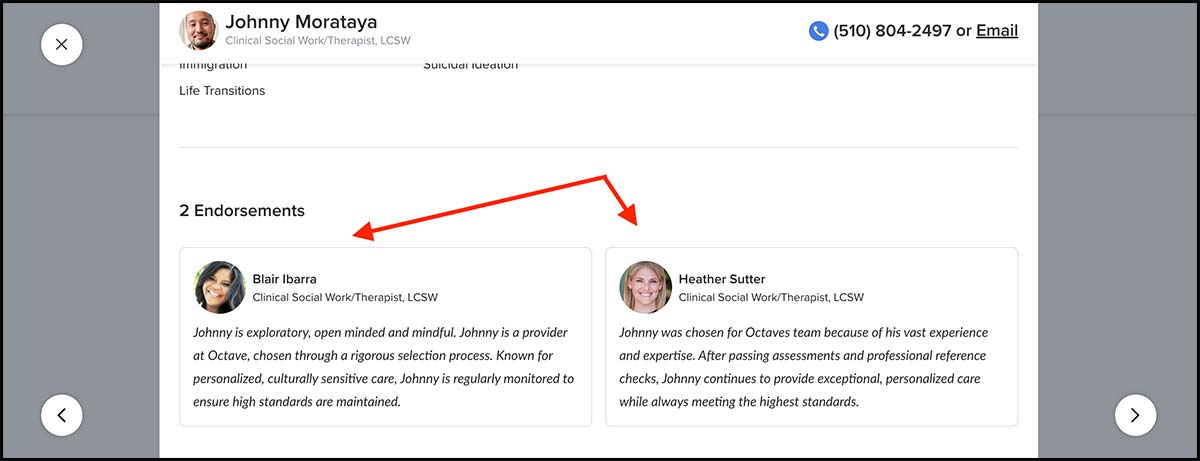
- On your profile as written endorsements in a dedicated section
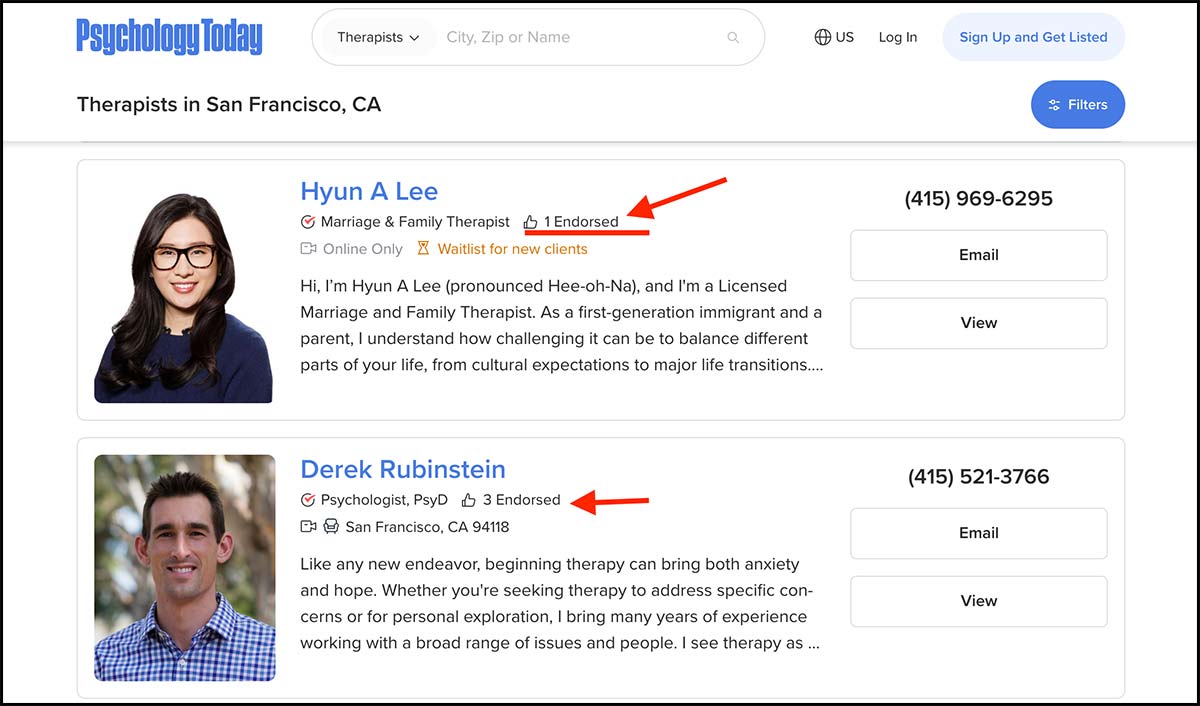
- As a visible count (heart icon) associated with your profile
- On other therapists’ profiles when you endorse them, with your name linking back to your listing
How to Endorse Another Therapist on Psychology Today
You can find how-to screenshots below for the entire process.
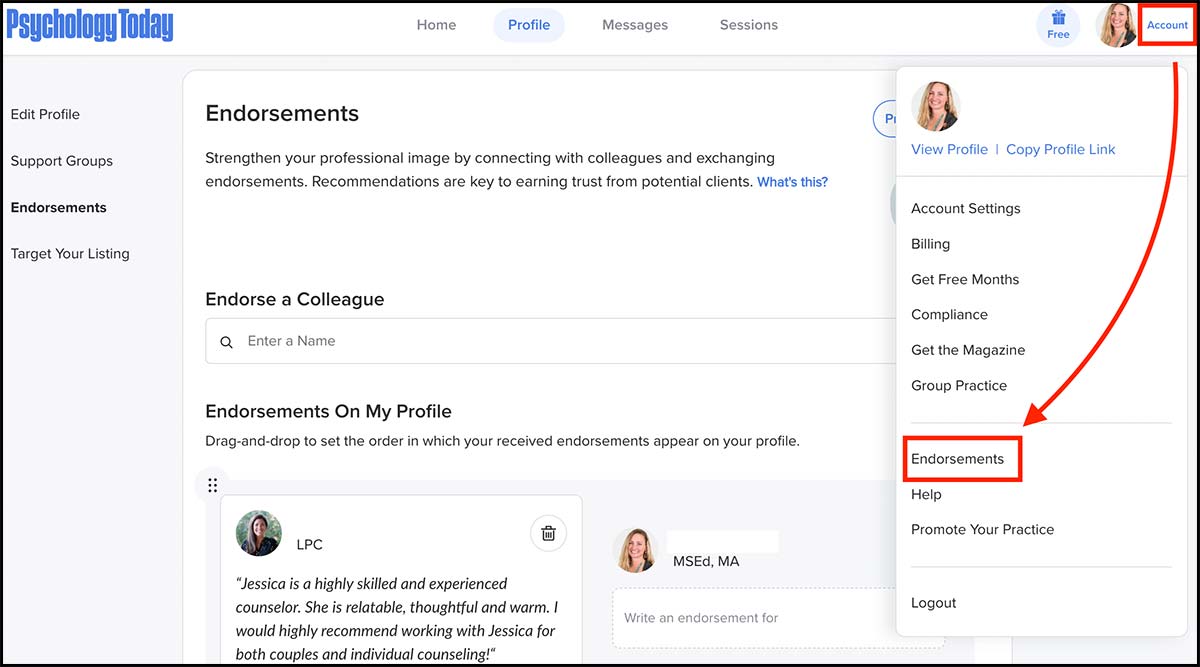
- Log into your Psychology Today account.
- In the top right corner, click on “Account” (next to your profile image).
- Scroll down to the section labeled “Endorsements” and click into it.
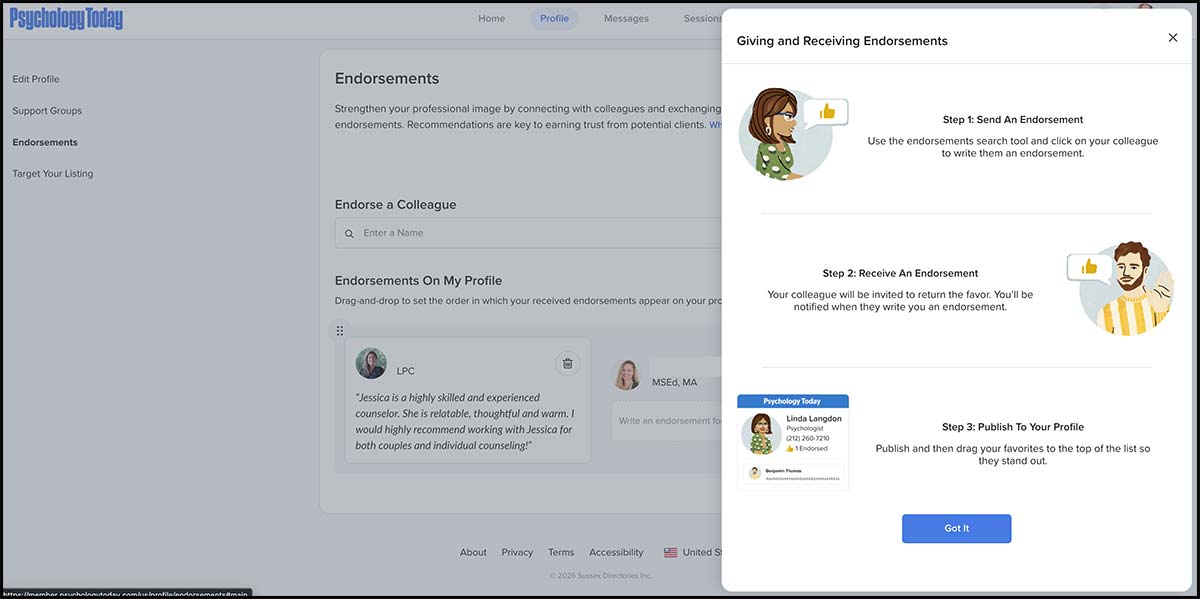
- When the page loads, a pop-up may appear explaining how endorsements work. Click “Got it” or close the window.
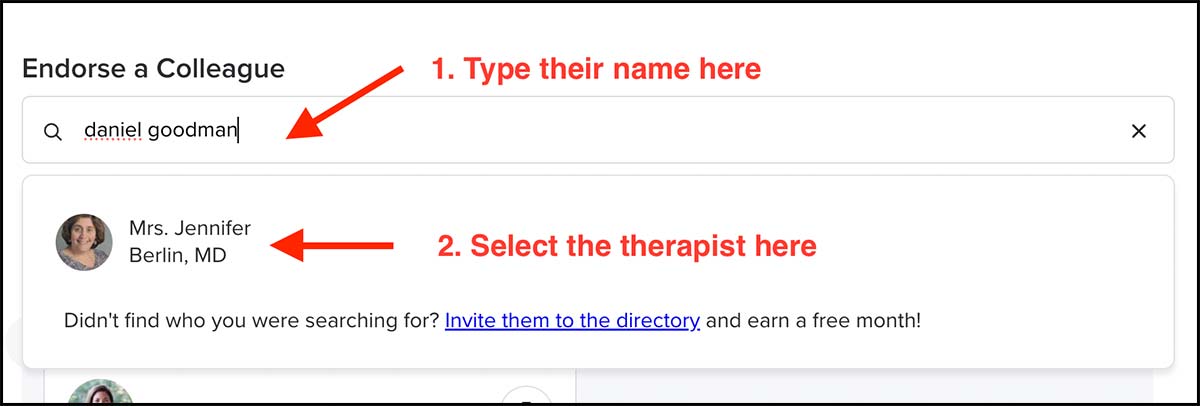
- Find the section that says “Endorse a colleague.”
- Start typing the name of the therapist you want to endorse.
- When their name appears in the dropdown list, click on it.
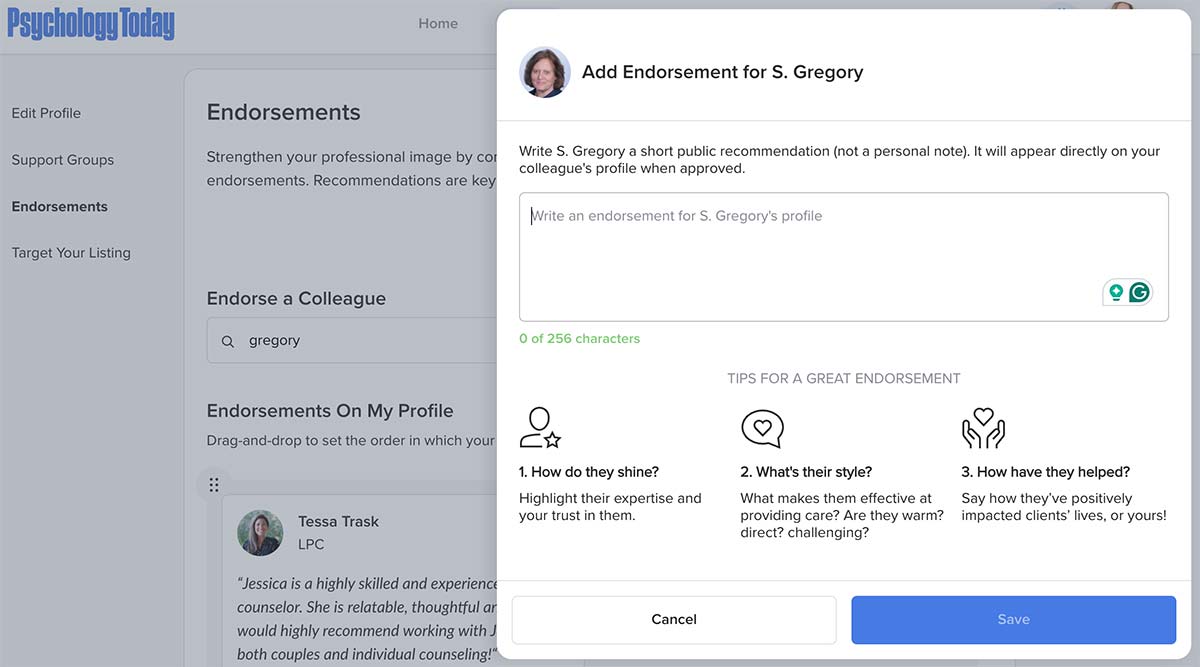
- A text box will appear where you can write an endorsement (up to 256 characters).
- Write your endorsement, then click “Save.”
- Your endorsement will be submitted, and the other therapist will receive a notification.
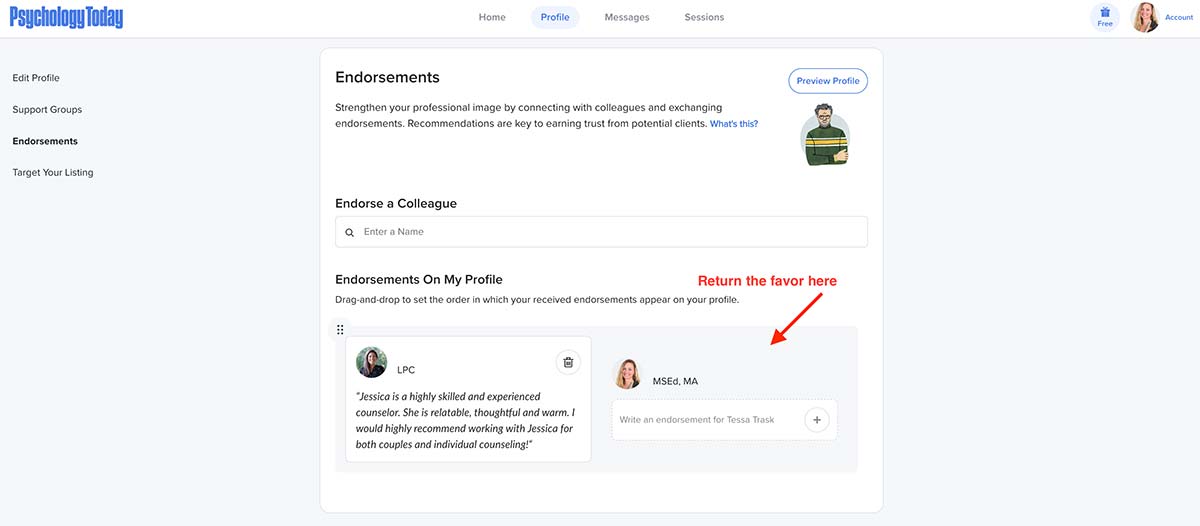
If someone has written a review for you, it’s even easier to return the favor:
- In the same endorsements section, you’ll see any endorsements written for you
- Next to each one, there’s an option to “Write an endorsement” back
- You can click that to quickly return the endorsement
Write a Strong Endorsement in Just 256 Characters
You don’t have much space, so every word has to do something. A good endorsement is specific, grounded, and clear about who the therapist helps. Generic praise doesn’t add much. You’re trying to give just enough detail to make someone feel confident clicking. Here’s a simple structure that works:
- How you know them
- What they do well
- Who they’re a good fit for
Example (within 256 characters): “I’ve worked with Sarah professionally and consistently refer clients to her. She does strong work with anxiety and perfectionism, especially with young professionals navigating burnout and high expectations.”
How Endorsements Function and Why They Matter
Endorsements influence a few key behaviors inside Psychology Today.
- They affect which profiles get clicked. A visible endorsement count can make a profile stand out when someone is scanning a list.
- They add third-party validation once someone lands on your page, giving additional context beyond your own description.
- They also create internal links between therapists. When your name appears on another profile, it gives people another path to find you.
At the same time, this feature fits into a broader shift. Over the years, Psychology Today has been adding more engagement-based elements, profile videos, expanded profiles, and now endorsements, all pointing toward a more interactive platform.
Engagement is something they can measure. Clicks, profile views, time on page, movement between profiles. Endorsements contribute to all of that. They give users more to evaluate, more reasons to click, and more ways to navigate the directory. Individually, these are small effects. Together, they can change how your profile performs.
Do Endorsements Affect the Algorithm?
There is no official answer. The Psychology Today algorithm is like a black box. The company does not publish ranking factors. It does not share the role AI plays in the system. And, there is no confirmation that endorsements directly influence where a profile appears in search results. However, they likely have indirect effects.
A profile with endorsements “may” get more clicks.
A profile with more context and credibility may hold attention longer. A profile connected to others may receive additional traffic through internal navigation. All of those behaviors are measurable.
So while it’s not accurate to say endorsements “boost rankings,” it is reasonable to say they align with the kinds of signals platforms tend to reward.
How Many Endorsements Are “Enough?”
You don’t need dozens. A small handful of specific, thoughtful endorsements is enough to change how your profile looks. In most cases, 5–10 is a solid baseline. After that, it’s diminishing returns.
Endorsements Are Not a Primary Driver of Referrals.
They won’t fix a profile that isn’t converting. They won’t give you control over search placement. And they won’t replace clear positioning or strong copy. But they are one of the few features that add visible credibility and create additional exposure within the platform at the same time.
Given how limited your control is on Psychology Today, that’s enough to justify using them.
Psychology Today is more competitive than it used to be, and the system behind it remains opaque. Endorsements don’t solve that. But they are a low-effort way to improve how your profile is perceived and how it connects to others inside the directory. If you’re already investing in the platform, it’s a feature worth incorporating.