The search for information online has changed in 2026. Google has rolled out AI Overviews and AI Mode to supplement traditional search results. More and more people are starting to use AI tools like ChatGPT or Perplexity to find information instead of doing a Google search.
Businesses need to adapt to the new realities of search or become invisible.
This article will explore AI visibility optimization and share several strategies that can boost the AI visibility of your brand.
What is AI Search Visibility
AI visibility is a metric that shows how often your brand appears in AI search results. This can include mentions in the context of being among the best products or services that align with a user’s search query, like this one.
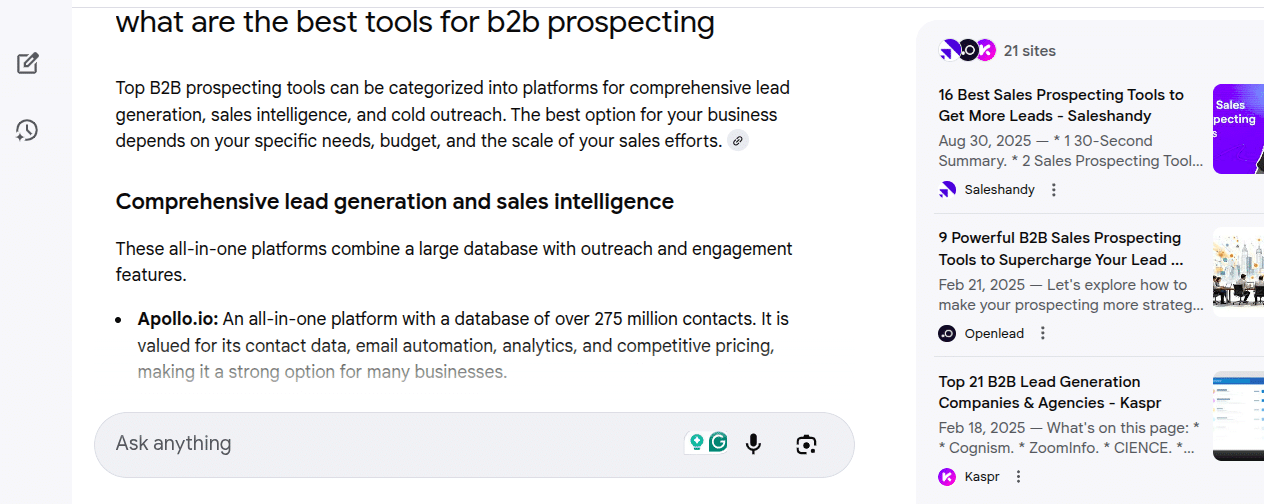
Having a high AI visibility can also mean getting your brand content cited as a source in AI answers. Low AI search visibility means your brand and branded content rarely appear in AI searches or appear in low positions.
Why Your Brand Needs AI Visibility
Investing in boosting AI visibility means taking the effort to change your digital marketing strategy and workflows. Here are the benefits of taking that effort.
- Presence in the new way of information retrieval. ChatGPT is used by 700 million people weekly, with 49% of users asking it to show information. That’s 343 million informational queries per week, far less than Google processes, but a significant number of people who can learn about your brand.
- Improved performance on Google. As Google’s AI Overview now generates above organic search results, brand visibility on AI Overviews translates to Google search visibility.
- Improved brand awareness and brand image. Appearing on AI searches, either as a trusted vendor or as a source of information, helps you build brand awareness and an image of a trustworthy brand. Even if it’s visibility without clicks.
- More qualified traffic. AI searches can lead to users visiting your site and converting, either directly from the AI platform, or later through googling your brand.
- Multi-purpose techniques. Many of the techniques used for improving AI visibility also improve other areas of marketing, most notably SEO.
How AI Tools Source Information
When a user types in a question into an AI search engine, there are two ways it can find the right information.
An LLM can refer to its own training set of data and reference information from one of the articles in it.
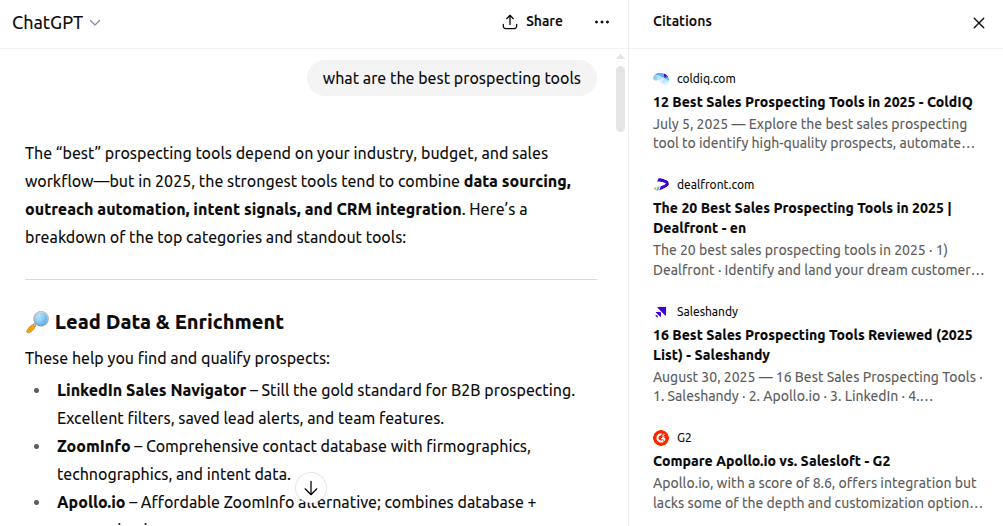
If the search requires fresh data or the AI doesn’t have that information in the database, it will perform a web search using either Google or Bing, depending on the model.
When the AI searches the web, it typically breaks down the question into several search queries in a process known as query fan out. For instance, for a question like “I run an SaaS company with a small team and a target market of medical professionals, how do we go about prospecting in 2025?” the LLM might look for:
- Prospecting for SaaS.
- Prospecting techniques in 2025.
- Marketing to medical professionals.
It will then combine the data from the three searches and reference the most relevant content.
When deciding which content to use and when to reference it, AI typically looks at:
- Presence of relevant keywords in SEO tags.
- Recency.
- Trustworthiness.
In web searches, most LLMs will inevitably also consider position in organic search, as searching hundreds of pages would be impractical. So higher organic rankings can translate to higher AI visibility.
AI Visibility Tracking
Before you try to improve AI visibility, you need to understand where your brand stands now and be able to track your progress. That can prove difficult as tracking AI visibility manually is virtually impossible, and no LLM so far offers a native data analytics solution.
Recently, a number of AI position tracking tools, like SE Ranking, have appeared. They allow you to have a better understanding of how your brand performs in AI search. SE Ranking will show you metrics like the number of mentions your brand has across the most popular AI engines, the average position of your links in the citation section, and net sentiment towards your brand.
Record the metrics with an AI tracker before you start AI visibility optimization. Look for correlations between your optimization strategies and results. If you have a large catalog of content, run experiments with different strategies to see which produces the best results.
Strategies for AI Visibility Optimization
Now that you have a better understanding of how AI visibility works, let’s look at several AI visibility optimization strategies that are based on how AI search operates.
Get Brand Mentions on Relevant Websites
When AI generates answers, it often refers to its existing database. In commercial questions about the best products, services, or places, the source is often a review or a comparison article from a reputable source.
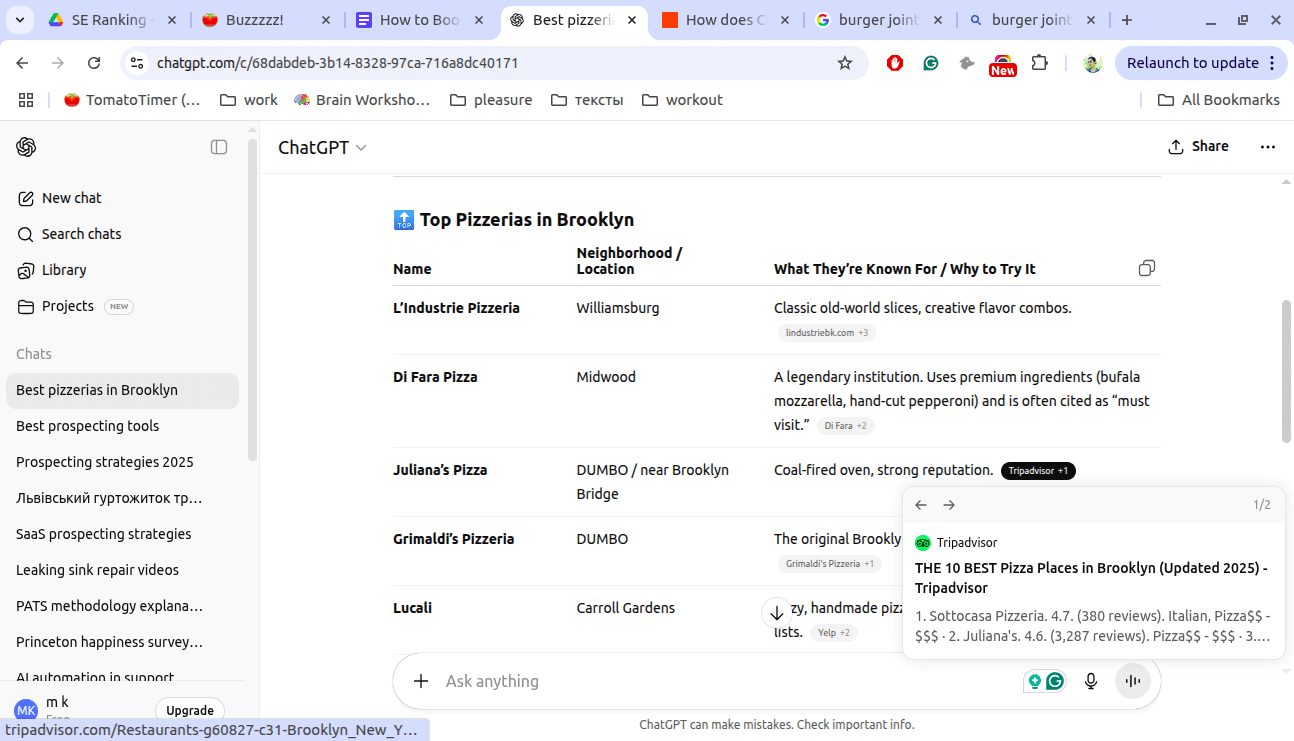
Having a presence in articles like these can help your brand boost AI visibility. Here’s how you can do that.
- Compile a few lists that your brand can appear on, like “best prospecting tools.”
- Search for those keywords on Google.
- Ask different AI models to provide this information.
- Gather the websites in the top 20 and in AI sources.
- Find email addresses of their editorial team.
- Craft a compelling email to convince them to review your service or product.
- Start an email campaign.
Typically, these campaigns don’t have very high response rates, but getting even a couple of mentions in articles like those can boost AI visibility.
Invest in Traditional SEO
To answer a lot of questions, AI tools will do a web search with Google or Bing. Not all websites referenced in the sources will be from Google’s top 10, but a sizeable portion will. Here’s a sample question posed to ChatGPT.
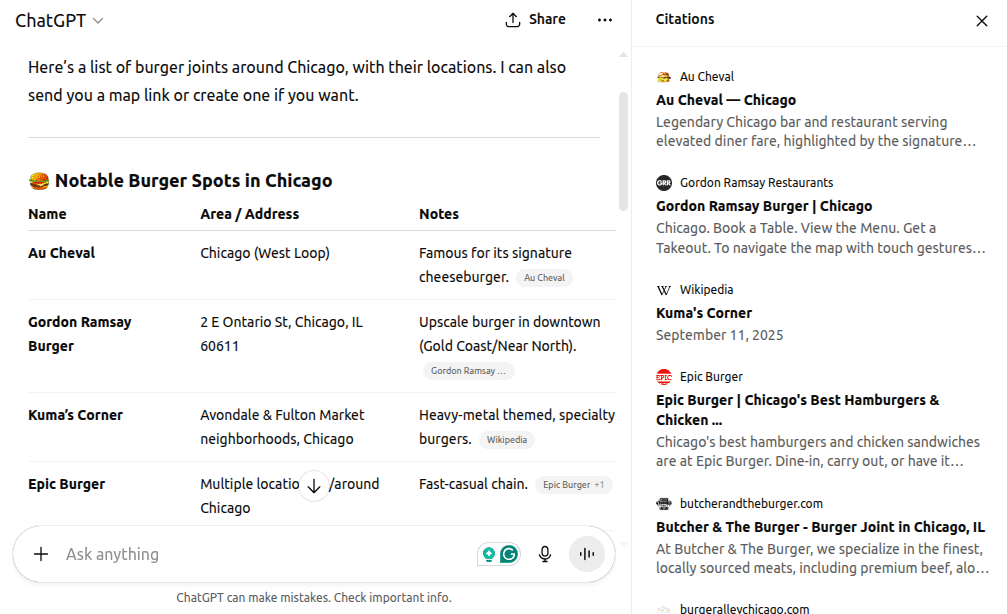
Many of the restaurants rated high by the AI are also ranking high on Google’s local and traditional search.
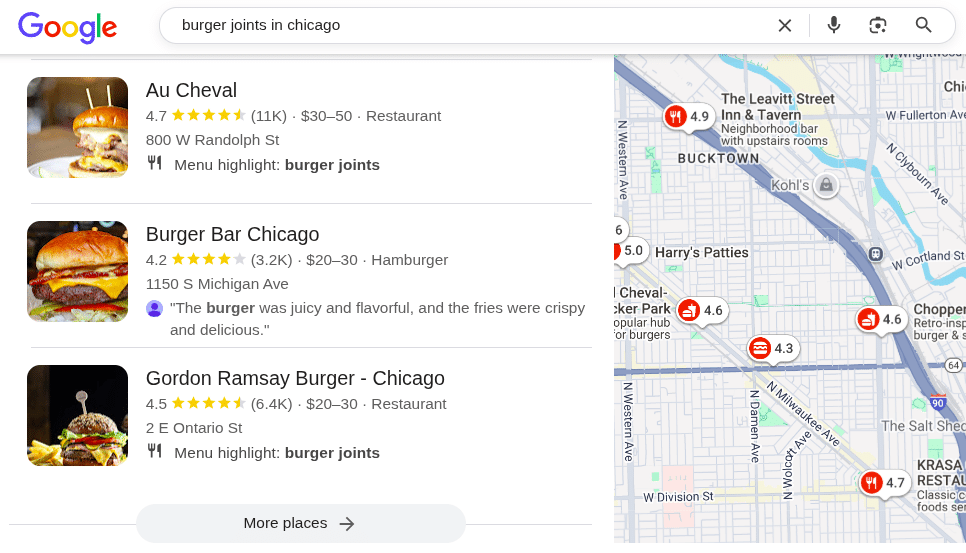
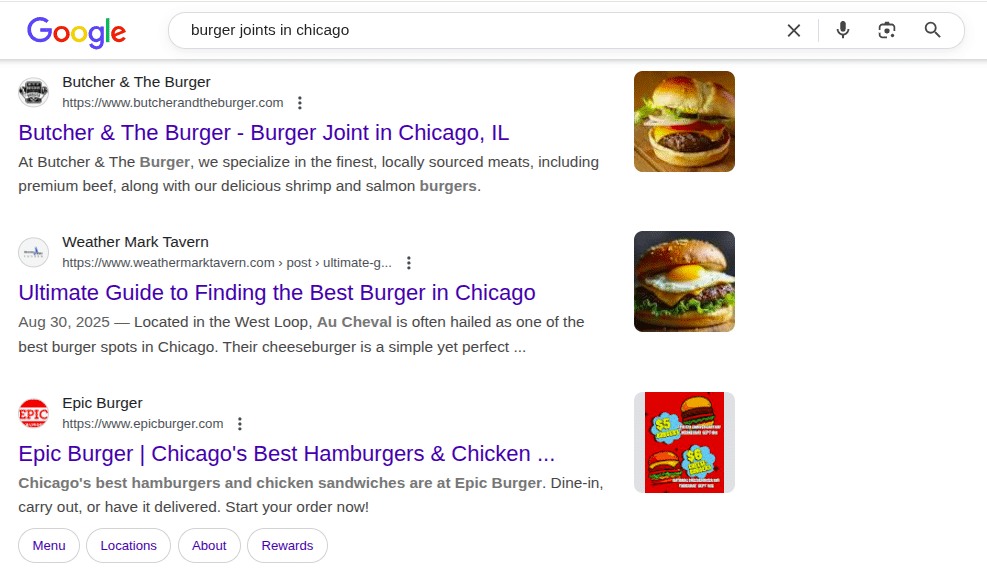
Investing in traditional SEO is likely to help AI visibility on top of bringing traffic on its own. Focus on these key areas
- Technical SEO. Fix mistakes that ruin loading times and crawlability.
- On-page SEO. Optimize pages for relevant keywords.
- Off-page SEO. Earn links and mentions from reputable sources.
- Local SEO. Create a GBP profile, earn reviews, and local citations.
Doing SEO helps both LLM visibility and visibility in AI Overviews.
Engage In Relevant UGC Discussions
Reddit, Quora, and Facebook community posts often show up in Google under the Discussions and forums section. These forums are also often quoted by AI engines as trustworthy sources of information.
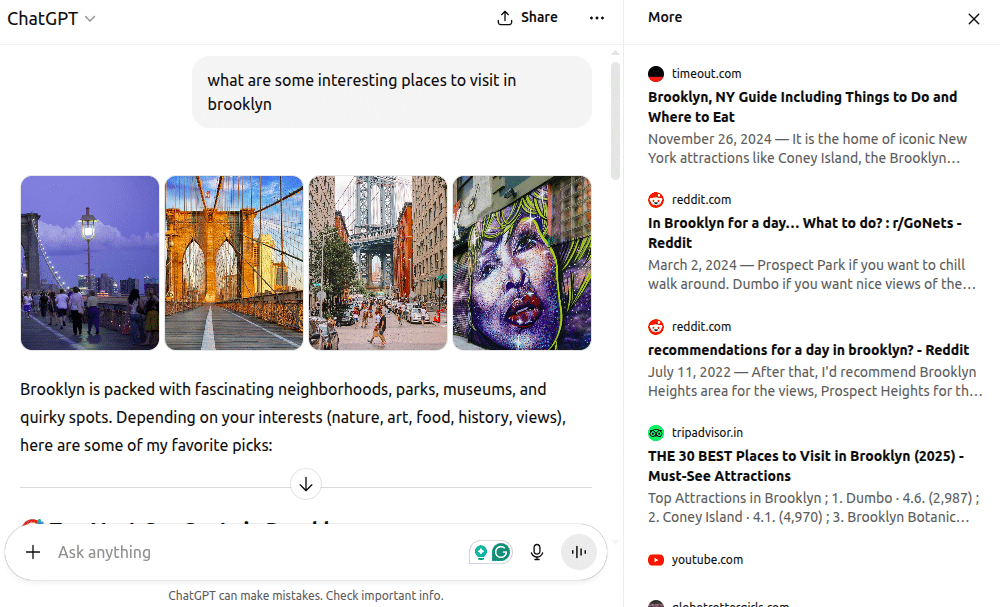
Mentioning your brand in the relevant discussions means there would be more chances of AI picking it up. Here’s how you can find relevant discussions.
- Compile a few questions that would fit your brand’s product or service.
- Search for them on Google.
- Go to the Discussions and forums section.
- Ask those questions to a couple of AI engines.
- Compile a list of relevant discussions.
If you want to add to a Reddit post, it’s best if you have a corporate account with a posting history. Many subreddits will either deny comments from new members or will be swift to delete the post if the moderators deem it promotional.
When writing a response to a thread, make sure it’s:
- Relevant to the question.
- Helpful.
- Truthful.
- Non-promotional.
Optimize for Questions, Not Only Keywords
AI search queries are conversational questions, not keywords like you’d see in traditional Google searches. A lot of AI visibility optimization revolves around finding the questions consumers might be asking and understanding the broader search intent behind them.
To find potential questions, you can use the following methods:
- Get data from Google’s People Also Ask section.
- Find long-tail keywords with keyword research tools.
- Get data from discussions and forums.
- Use an AI to formulate potential questions.
If you’re using AI, give it plenty of information on what your business does and who its main customers are.
Once you have a list of questions, start incorporating them into existing and new content.
Create Content Often Cited by AI
To get your brand visible, you need to create content that AI loves to cite. In the case of many commercial questions, that content is listicles and comparison articles.
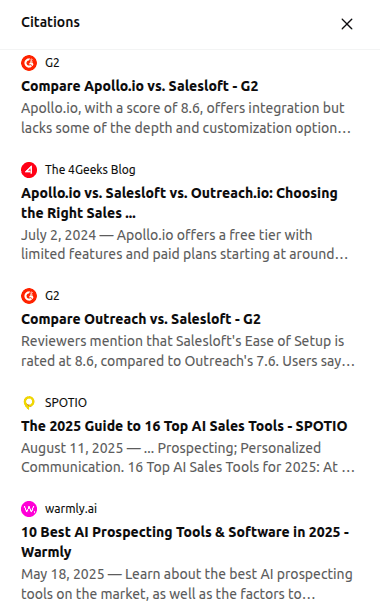
This format lends itself to AI understanding as it’s rich in well-structured lists, tables, and other content that is easy to crawl and rephrase to meet a variety of different questions.
Do research on what type of content is often cited to answer questions relevant to your brand and invest in creating similar content.
Structure Content for AI Visibility
Structure all of the content you write to make it more suitable for AI to parse, understand, and reiterate as an answer. This mostly means including a lot of summaries in your content:
- Write the most important information in short, self-contained paragraphs.
- Use questions as headings.
- Use question-answer structures in text.
- Use lists and tables where appropriate.
AI often provides answers in the form of bullet-point lists and tables for clarity, and providing information in the same way can save time on processing regular text and increase the odds of your content being referenced.
Use Structured Data
Schema markup is traditionally viewed as a way to give more information about your content to search engines, but it seems AI models access and evaluate it as well. According to recent experiments, new content with no or poorly implemented structured data has trouble appearing in AI results.
If you want a piece of content to have better odds of gaining AI visibility, create a Schema markup for it and fill in all the appropriate fields. For Article Schema, those would be:
- Subject of the article and its summary.
- Information about the author, editor, and contributors.
- Related topics and concepts mentioned in the article.
- Wordcount and estimated reading time.
- Date of publishing in the proper format.
Some of the fields, like genre or location the article is created at, aren’t necessary to fill in if they’re not relevant to the content. You can use AI to write the markup, but always use Google’s validator tool before submitting it.
Add FAQ Sections
Since AI search is a series of questions and answers, the frequently asked questions sections lend themselves to AI responses. You can either create separate FAQ pages or add FAQ sections to the content that you want to have AI visibility.
Use the FAQ Schema markup to make that content easier to understand for AI.
Update Content Regularly
Unless a user specifies what date they want content from, AI will mostly provide the most recent sources. To play into this tendency, update your most important content regularly.
- Review content for information that is no longer relevant.
- Add updated information.
- Add more depth with new illustrations, quotes, or statistics.
- Add the date of the update to the article and structured data.
It’s impossible to maintain all of your content on a monthly basis if you have a large blog. Focus on content that has the best conversion rate — content with commercial intent. Update other well-performing content less regularly.
Fix Technical Issues
If the AI engine’s crawler can’t access your site, your brand won’t be visible on that AI. To avoid this, fix issues that might be blocking those crawlers.
- Double-check that robots.txt doesn’t block AI crawlers.
- Check server logs to confirm bots from AI engines do access your site.
- If they don’t, whitelist them in your CDN.
Out of Claude, Perplexity, ChatGPT, and Google, only the latter can do client-side rendering of JavaScript. If your site runs on JS, it will only be visible in AI Overviews and AI Mode.
Implement server-side rendering to avoid this and gain AI visibility across LLMs.
Summary
Organic search, social media, and other digital channels of brand discovery are here to stay. The odds are, AI search is going to take its place among them for good.
Don’t miss the moment and optimize for AI visibility to boost brand awareness and potentially attract relevant traffic to your website. Focus on gaining mentions and citations in authoritative content and optimizing your content for AI crawlers.